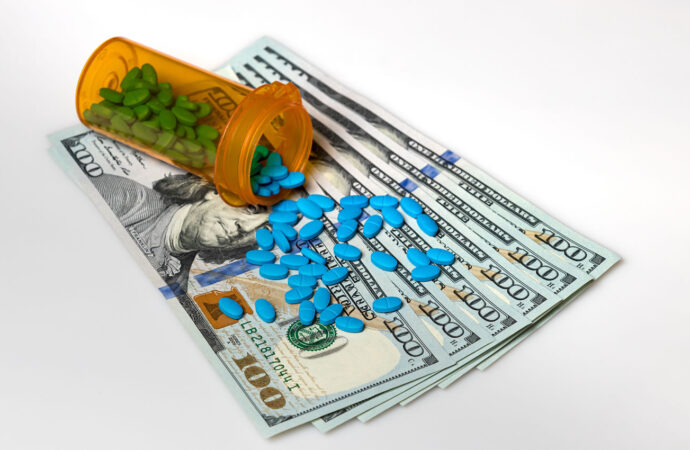
Prescription drug costs can take a serious bite out of a senior’s monthly budget. Even if you have a Medicare Part D Prescription Drug Plan (PDP) or a Medicare Advantage Drug Plan (MAPD), you may still face high out-of-pocket expenses.
In 2026, Medicare caps annual out-of-pocket costs for covered medications at $2,100. But that cap only applies to drugs on your plan’s formulary (its approved drug list). If a medication isn’t covered, you pay the full price — and those costs don’t count toward the cap.
If you take one or more medications daily, those expenses add up quickly.
The good news? There are practical ways to lower what you spend.
Medication Prices Can Vary Greatly
Many people assume prescription prices are fixed. They aren’t.
Prices can vary considerably from one pharmacy to another in the United States because of the way drugs are sold to pharmacies and because of the contracts the prescription drug plans negotiate with pharmacies.
In general:
- Drug manufacturers sell their products to distributors.
- The distributors, in turn, sell the medicines to pharmacies.
- Pharmacies negotiate with distributors to get the lowest wholesale price they can get. The more negotiating power a pharmacy has, the lower their cost.
- The pharmacies then set their cash price for each drug by adding their markup, and usually a flat fee for filling individual prescriptions.
- Medicare may also negotiate prices on some drugs
- Insurance companies negotiate separate contracts with each pharmacy.
- Each insurance plan assigns drugs to different pricing tiers.
That’s why the same medication can cost hundreds of dollars more at one pharmacy than another — even in the same neighborhood and using the same insurance plan.
Compare Prescription Drug Prices
Comparison shopping for your prescriptions can save real money. Here’s why:
- Not all plans cover the same drugs.
- Your medication may be covered by one plan and not another.
- You pay the full price of any medications your plan doesn’t cover.
- What you pay for medications that are covered can differ based on where you fill the prescription.
- Which pricing tier a medication falls into can vary from one insurance plan to another. (Higher pricing tiers increase your out-of-pocket costs.)
- A drug may cost less without insurance than with it.
- Brand-name drugs can sometimes cost less than generics, depending on your plan.
How Much Can You Save by Comparing Drug Prices?
It depends on the medication, but the amount can be significant.
A personal example: My husband and I take the same generic medication, same dosage, same insurance plan. Yet one prescription costs $45 more — simply because we use different pharmacies.
In another case, my brand-name medication costs $100 less than the generic version under my PDP. That’s over $1,200 a year in savings.
The price variations for my family’s medications aren’t unusual, either. The Consumer Protection Office in the State of Michigan did a survey and found prices for the same prescription drug differed by as much as $500 between pharmacies.
The lesson is simple: never assume.
If you haven’t price-shopped your prescription medications, you might be spending a lot more than necessary.
How to Compare Prescription Drug Prices
To get the best price, you’ll want to compare prices of generic and brand-name drugs at local pharmacies, online pharmacies, and mail-away pharmacies. (Insurance companies often suggest you can get lower prices through their mail-away programs).
Here’s what to determine:
- Does the pharmacy accept your insurance?
- Is it one of your insurance plan’s preferred pharmacies?
- Does it offer the medication you need at the dosage your doctor prescribed?
- What is the price with and without insurance?
Start With Your Own Drug Plan Website
The first place to try to gather this information is your drug plan’s website. Some, such as United Health, have price comparison tools that let you search for medications by name and then show you what you’ll pay for the medication at different pharmacies in your area and at any mail-away options they support.
Look for Help for Veterans
If you are a veteran, check with the Veteran’s Administration to see if you are entitled t. If you qualify, the benefits can be significant.
Request a 90-Day Supply
If you take a medication regularly and are refilling it monthly, ask your pharmacy if it would be less expensive if you got a 90-day supply. If so, ask your physician to prescribe 90 days’ worth at a time.
Ask Your Doctor about Alternative Medications
Another possible way to save money is to ask your doctor if there’s a lower-cost alternative that would work.
Or, if the medication isn’t covered at all by your insurance, ask your doctor to file a formulary exception with your insurer. If that’s turned down, as a last resort, you could file an appeal with the insurance company.
Look for Manufacturers’ Discounts
Some brand-name drug manufacturers offer financial assistance programs for patients who qualify.
Visit the manufacturer’s website directly to see:
- Whether assistance is available
- Income requirements
- Application steps
These programs are especially helpful for expensive brand-name drugs not covered by insurance.
Compare Local Pharmacy Prices to Online and Mail-Away Pharmacies
You may be able to reduce what you spend on prescription drugs by using a mail-away pharmacy or an online pharmacy that’s licensed in the U.S. Your PDP plan may have its own mail-away option.
Two well-known online pharmacies are:
- Amazon Pharmacy. Amazon Pharmacy is a full-service pharmacy. It shows that pricing with and without insurance. It accepts most major insurance plans, but you can buy without insurance, too.
Amazon also offers RxPass for Prime members. RxPass does not accept insurance. However, it makes eligible generic medications for many common conditions available for only $5 a month.
- Mark Cuban Cost Plus Drugs. Cost Plus offers lower prices on the medications in its formulary because it negotiates the price directly with manufacturers. You pay their cost plus 15%, a pharmacy labor cost and shipping. They only work with a few small group of prescription insurance providers (early 2026), so the cost of medications purchased there may come out of your own pocket.
Check Online Platforms for Coupons and Discounts
Depending on circumstances, you may be able to save money on name brand medications by using online portals like GoodRX, TrumpRX, or SingleCare.
Basically, these platforms act as a search tool for discount prices. If there are any available discounts for the medication you need, you’ll be shown a coupon or be directed to the manufacturer’s site to make the purchase.
When you purchase medications this way, in general:
- The cost comes out of your pocket
- The cost will not count towards your insurance deductible
- The purchase will not count toward the Medicare maximum out-of-pocket amount
For the most part, the only time you’ll save money through them is:
- If the medication you need isn’t covered by your insurance
- If you don’t have prescription drug insurance
- Your deductible is too high
Offerings on various sites differ.
TrumpRX offers government-negotiated rates on medications, but at the time of this writing(February, 2026), fewer than 50 medications were listed.
GoodRX and SingleCare cover many more medications and show you comparison prices at various pharmacies.
Important Facts About Paying for Prescriptions Out of Pocket
Non-covered medications and other medications you purchase on your own don’t count toward the Medicare yearly $2100 cap on out-of-pocket expenses or towards your prescription drug plan’s deductible.
Even if you find certain medications are less expensive through these sites, you should still maintain your Medicare Part D plan. Similarly, consumers who are not seniors should be wise to maintain their prescription drug plan.
Consider Switching Drug Plans
Not all prescription drug plans cover the same medications or charge the same amounts.
You can review options using the Medicare Plan Finder during open enrollment. See these articles for information on open enrollment:
- Original Medicare – October 15 to December 7
- Medicare Advantage Open Enrollment – January 1 to March 31
Plans change formularies and pricing every year. Even if you were satisfied last year, it’s worth reviewing annually.
Beware of Fake and Unsafe Online Pharmacies
Unfortunately, there are people who run unsafe and illegal pharmacies online. They advertise and sell unregulated, counterfeit prescription medications at deeply discounted prices, often without requiring a prescription. The medications may be ineffective, or worse be laced with dangerous ingredients.
In addition, buying from illegal pharmacies could put your personal data at risk, cause your credit card to be hacked,or install a virus or malware on your computer or phone.
How to Avoid Fake Online Pharmacies
The FDA recommends consumers be wary of online pharmacies that:
- Do not require a doctor’s prescription.
- Are not licensed in the U.S. and by your state board of pharmacy.
- Do not have a licensed pharmacist on staff to answer your questions.
- Send medicine that looks different than what you receive at your usual pharmacy, or arrives in packaging that is broken, damaged, in a foreign language, has no expiration date, or is expired.
- Offer deep discounts or prices that seem too good to be true.
- Charge you for products you never ordered or received.
- Do not provide clear written protections of your personal and financial information.
- Sell your information to other websites.
Signs of Safe Online Pharmacies
According to the FDA, safe pharmacies:
- Always require a doctor’s prescription.
- Provide a physical address and telephone number in the U.S.
- Have a licensed pharmacist on staff to answer your questions.
- Are licensed with a state board of pharmacy.
You can also help ensure you are using a safe and legal online pharmacy by checking the pharmacy’s license in the state’s board of pharmacy license database by using the location tool on the FDA’s BeSafeRx website. If your online pharmacy is not listed, don’t use that pharmacy.
Don’t Skip or Stop Medications to Save Money
Don’t try to save on medication costs by skipping doses or stopping the medication. Doing so could worsen your health or the condition you are being treated for.
Related reading: How Medicare Works
Generic Vs Brand Name Drugs
According to the U.S. Food and Drug Administration (FDA), a generic medicines:
- Contain the same active ingredients as brand-name drugs
- Provide the same clinical benefit
- Must meet the same safety standards
Cost of Generic Drugs
Generics often cost 80–85% less because manufacturers don’t repeat expensive clinical trials.
However, insurance negotiations can sometimes make a brand-name drug cheaper than the generic under certain plans.
So again, compare before filling a prescription.
Time Well Spent
Saving on prescription medications takes time and a little effort. But that effort can translate into hundreds — even thousands — of dollars in annual savings.
More importantly, it gives you control.
When you compare prices, review your plan each year, and ask questions about alternatives, you stop being a passive consumer. You become an informed one.
Managing medication costs isn’t just about saving money. It’s about protecting your health, your budget, and your peace of mind. And that’s worth the time. need can be time-consuming, but the savings you can realize could be significant.
Disclaimer: The information on this website is provided for informational purposes only and should not be considered as legal, tax, accounting, or medical advice. Please consult a licensed professional for help with any specific questions and issues you may have.










Leave a Comment
Your email address will not be published. Required fields are marked with *